
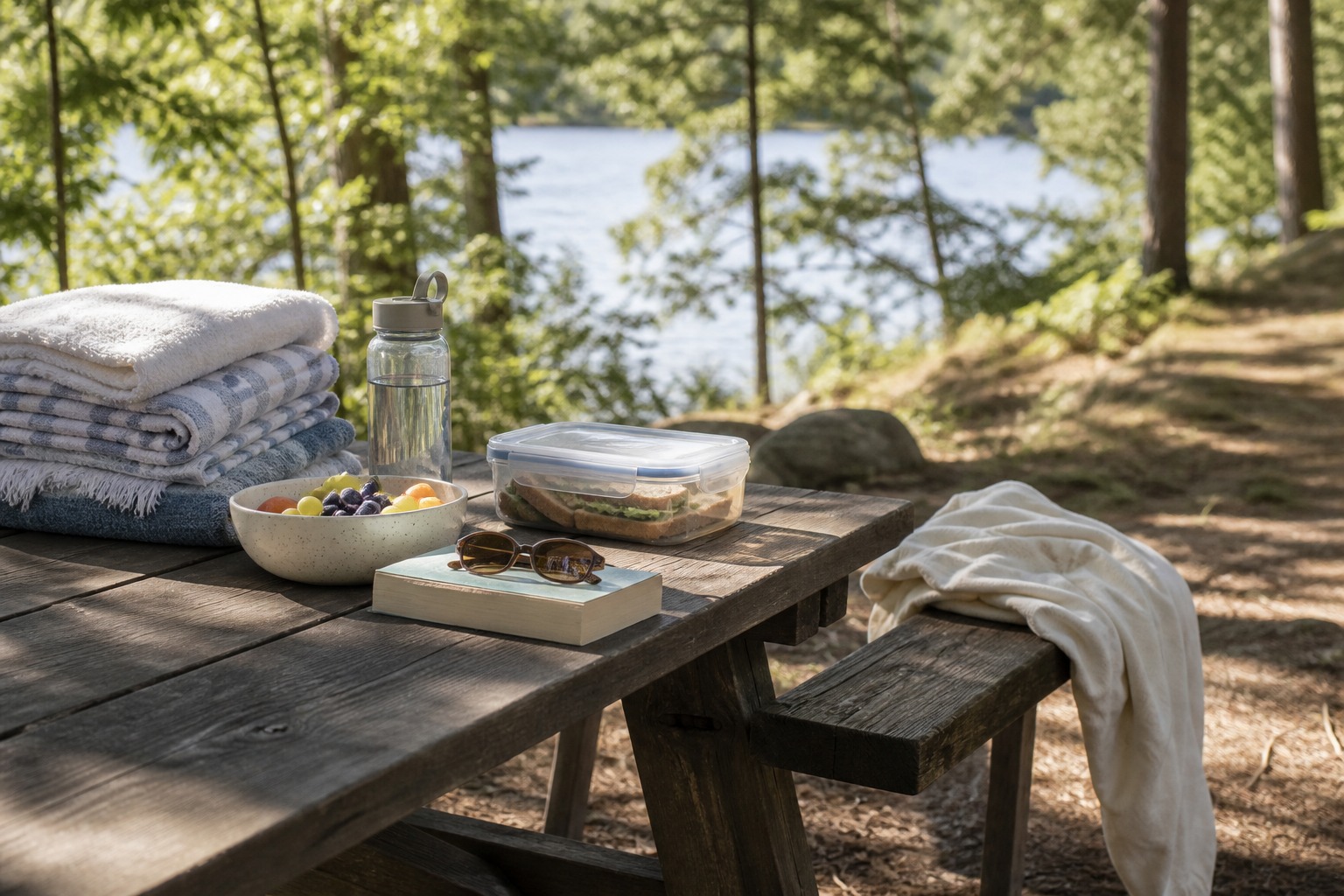
Claim a place without making a production of it
Put the towel over the chair. Set the drink somewhere it will not immediately be kicked over. Move the sandals out of the path. The day has officially started.
These tiny acts are useful, but they also mark the change from getting ready to being there. A good day near the water often begins when everybody stops moving equipment and sits down for five minutes.
Keep one thing cold and one thing dry
There is no need to engineer an outdoor command center. A cooler with cold water and a dry spot for phones, keys, and the paperback nobody has opened yet will carry most of the day.
The ritual matters because it removes the low-grade questions. You know where the important things are. You know there is something cold. Nobody has to search six bags for the keys.
Make lunch easy to abandon and resume
Waterfront lunches work better when they tolerate interruption. People arrive at different times, somebody gets wet again, and the conversation takes longer than expected. Food that can be assembled, covered, and returned to does better than a meal with a narrow window of perfection.
Put out fewer things and refill them. The table stays calmer, the food stays fresher, and nobody spends the afternoon protecting a complicated spread from the weather.
Bring the sunset layer before sunset
The smartest person near the water is often the one who carried down a sweatshirt while it still seemed unnecessary. Once the light changes, warmth and mosquitoes can change the mood quickly.
Put the layer within reach, turn on whatever gentle light the space uses, and let the afternoon become evening without forcing everybody to reset somewhere else.
Leave one ordinary moment alone
Take the group photo. Then put the phone down for a while. The day does not need constant evidence.
The rituals that last are rarely spectacular: the same chair, the same faded towel, the drink passed to the person who just arrived, and the extra ten minutes everyone agrees to stay.