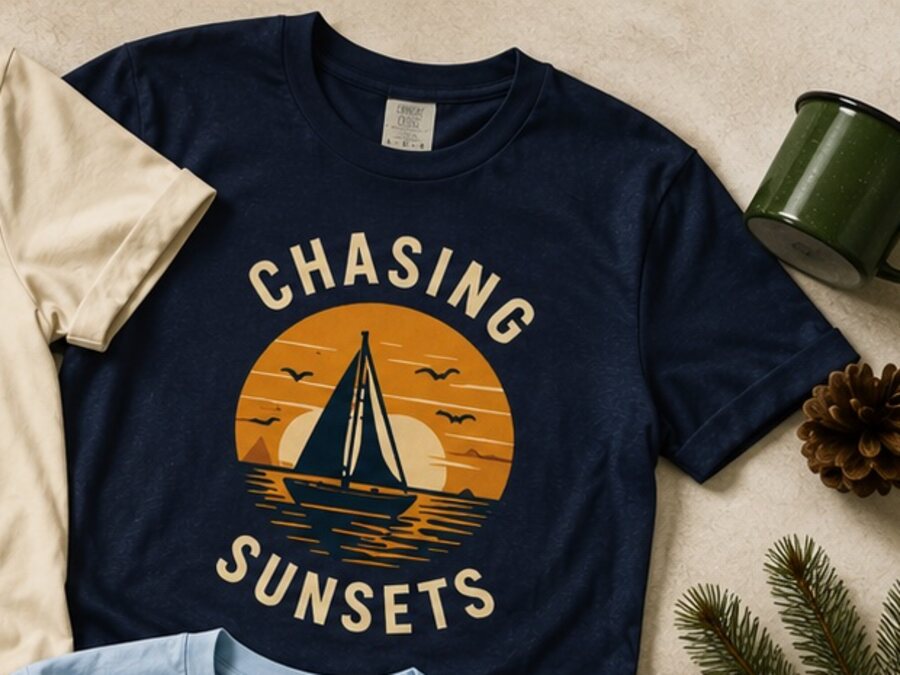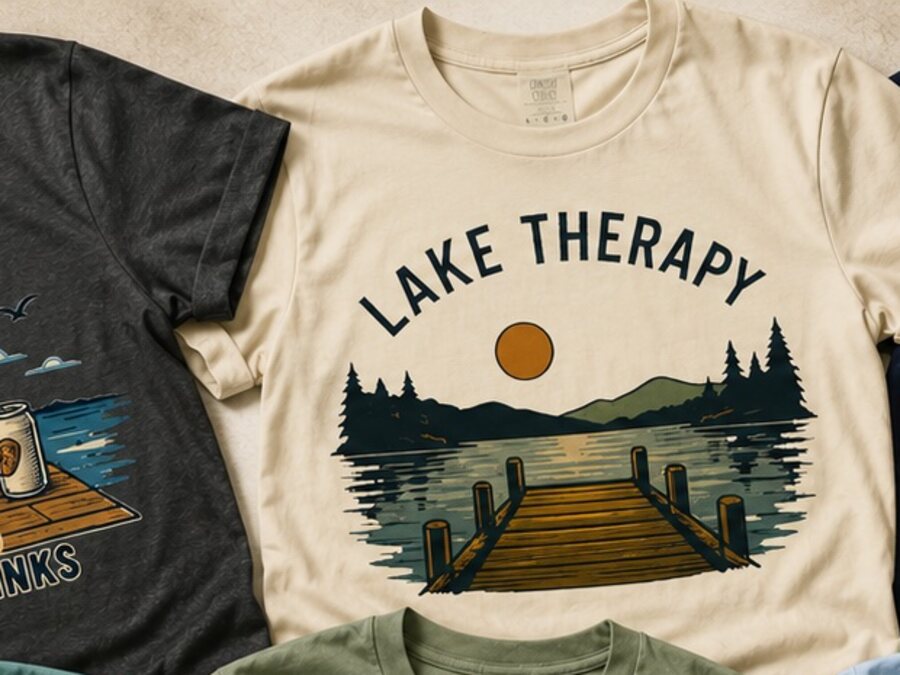

Categories are useful beginnings
A category tells us where to look. It does not tell us what to make. Dogs, camping, music, gardening, and lake life are too broad to function as creative direction on their own.
The collection begins when the category turns into behavior: the dog that sits in the exact wrong place, the mug that only appears at a campsite, the drawer full of parts that might become useful, or the weather check performed before anybody admits there is a plan.
Objects carry more meaning than labels
The right object can describe a whole routine. A faded dock line, scratched thermos, labeled tackle tray, soil-stained glove, or stack of handwritten set lists contains evidence of use.
That evidence helps a design feel observed. It also gives the artwork visual material beyond the obvious icon everybody in the category already uses.
Language needs an owner
A phrase is stronger when you can imagine who would say it, when they would say it, and whether they would still find it funny on the tenth wear.
Without that owner, copy becomes a pile of energetic words around a keyword. It may be relevant, but it does not feel recognized.
Variety comes from looking closer
Broad prompts tend to produce repeated solutions. Specific context creates different jobs for the designs: one can capture a quiet ritual, another a useful object, another the group joke, and another the visual atmosphere of the place.
The collection remains coherent because the details belong to the same world—not because every shirt repeats the same badge, typeface, and layout.
The global brand should stay out of the way
ShirtShirt provides the standard and the frame. The collection provides the personality. That separation lets a waterfront collection sound relaxed without forcing a future collection about a completely different interest to borrow its weather, colors, or jokes.
The common idea is specificity. The specific details must change.